
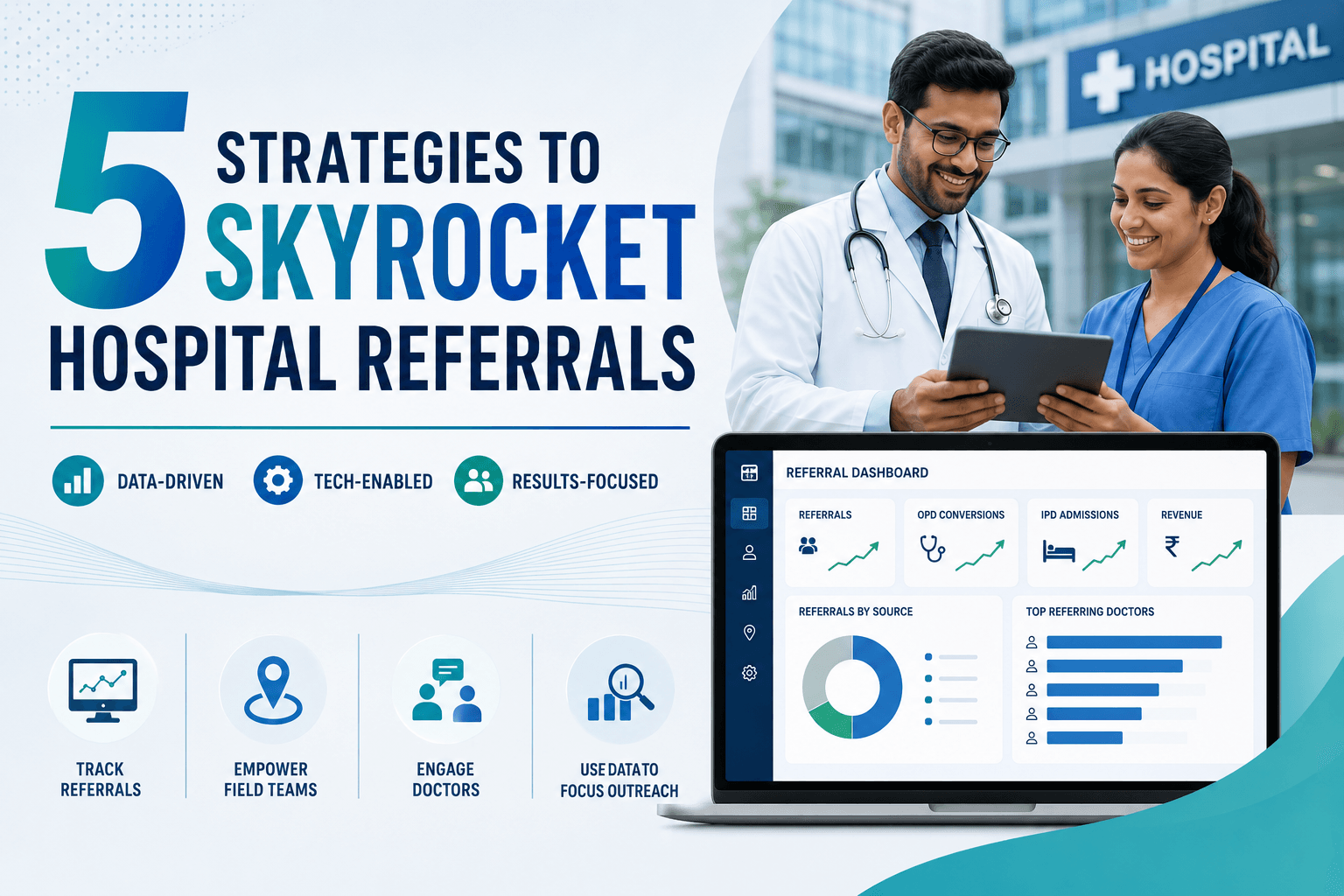
Hospitals grow when they capture and convert referrals efficiently. Many still rely on ad-hoc WhatsApp messages and spreadsheets – a surefire way to “leak” patient opportunities. In this post, we explore five proven strategies that healthcare leaders can use to increase referrals, improve follow-up, and ultimately drive more scheduled admissions. Each tip is backed by industry best practices and showcases how a modern referral platform can centralize the entire process.
1. Centralize Referral Tracking
Manual processes lose patients. Instead, use a referral-tracking system that ties each doctor or health camp lead to a patient outcome. For example, PARAM’s dashboard connects “Lead → Referral → OPD → IPD → Revenue”, so nothing falls through the cracks. Action: Ensure every referred patient is logged in a CRM or referral app. Instantly flag missed follow-ups, and send automated reminders. This leads to faster outreach and higher referral conversion rates.
2. Empower Your Field Teams (PROs)
PROs (patient outreach officers) are the hospital’s frontline. Equipping them with a mobile app and GPS check-in boosts accountability. PARAM’s PRO module allows photo check-ins and auto-route planning. Action: Use Geo-enabled tools so managers can audit visits without calling or texting. Reward PROs when referrals come from their verified visits. This transparency turns random calls into a structured pipeline.
- Engage Referring Doctors with Feedback
Referrals grow when doctors are kept in the loop. Automated doctor portals (like PARAM’s “Referral Doctors” module) let physicians see patient status updates and performance analytics, eliminating endless status queries. Action: Send regular reports (via email or portal) on referral outcomes and thank-you messages for successful referrals. Building this feedback loop strengthens relationships – a key to repeat referrals.
4. Use Data to Focus Outreach
Not all sources are equal. Track which clinics, specialties, or campaigns yield the best ROIs. PARAM’s analytics show top-referring doctors, villages, and camp ROI. Action: Shift effort towards the top 20% of referral sources (“vital few”) and cut ineffective channels. For example, if gastroenterologists bring 30% of new OPD patients, plan regular webinars or visits to them. Use dashboards to make these decisions in seconds.
5. Automate Campaign ROI Reporting
Track health camps and marketing campaigns end-to-end. Many hospitals log camp leads in Excel, missing ROI calculations. A proper tool tags every patient acquired through a campaign. Action: Tag each digital/physical campaign in your referral system. Then measure admissions per campaign and cost per patient. PARAM’s CEO dashboard even attributes IPD revenue back to individual camps. With this visibility, you can double down on what works (e.g. frequent camps that bring high OPD conversions) and halt non-performers.
Conclusion
By implementing a centralized referral system and data-driven processes, hospitals unlock steady patient flow with less effort. Key steps include real-time referral tracking, PRO accountability, doctor feedback loops, targeted outreach based on analytics, and campaign ROI measurement. Modern platforms (like PARAM’s) unify these features into one dashboard.
Ready to put these strategies into practice? Book a Demo of PARAM to see how data-driven referrals can grow your admissions predictably. Our team will show how easy it is to tie every new patient back to its source and close the loop on referrals.